
Delivering social value for women: Report now available
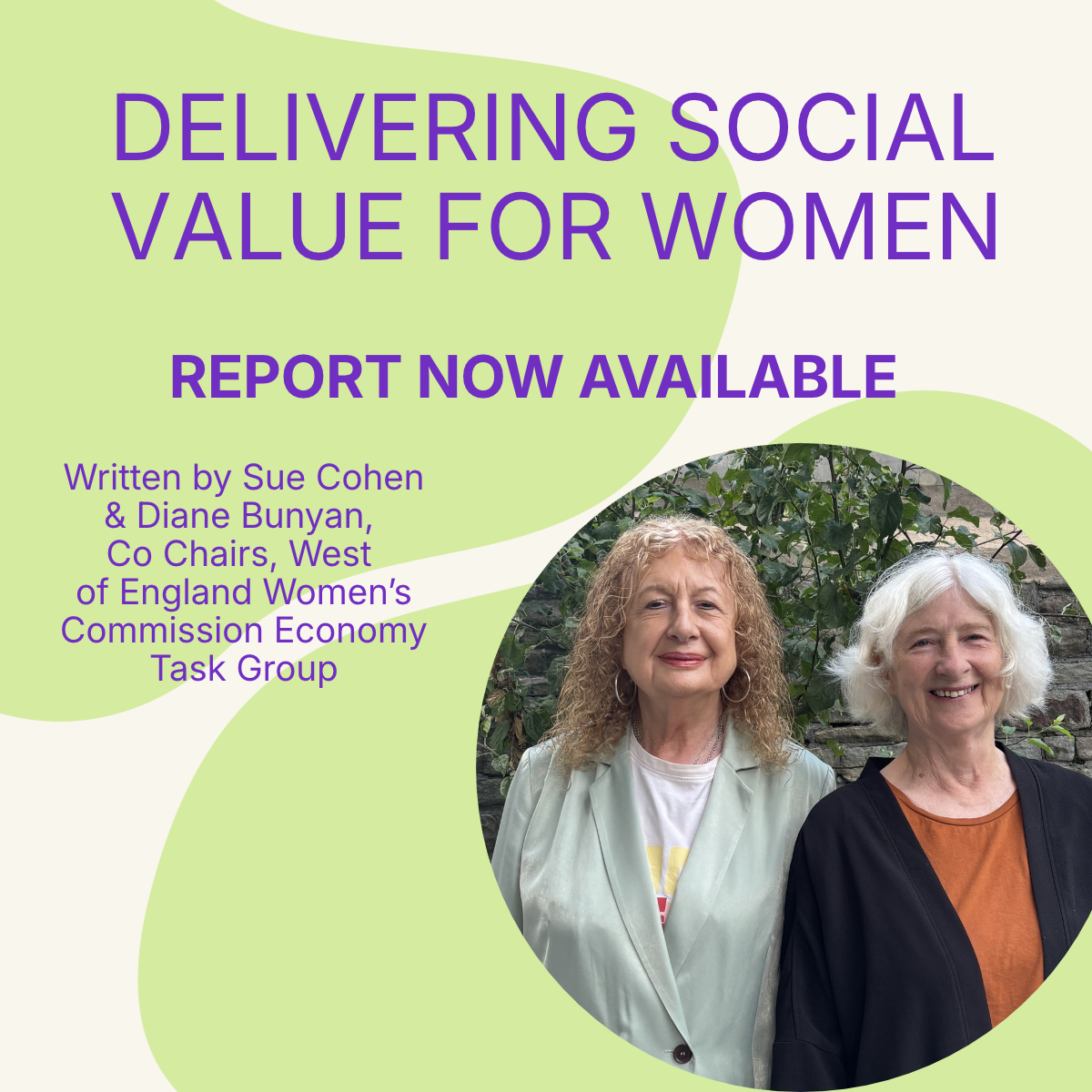
Following our recent Social Value Summit, a report is now available detailing discussions and action plans aimed at transforming regional procurement in delivering social value for women and children in poverty in the West of England.
Held on 1 July 2026, the Summit brought together representatives from three different sectors: public bodies commissioning and procuring services; private and not for profit organisations bidding to provide the work; and community and voluntary organisations who understand and support local needs.
There were more than 50 delegates, including representatives from international construction companies, regional regeneration sites - Temple Quarter, Brabazon and Somer Valley - local authorities, NHS, Police, Universities, Voluntary and Community Sector (VCS) partnership bodies and specific community and voluntary sector organisations.
Why women?
The Summit's focus on women is not a framing choice — it is a response to specific, measurable disadvantage, set out by Diane Bunyan (Co-Chair, Economy Task Group) at the opening of the summit.
Nationally
Women are twice as likely to be in severely insecure work: 26% of working women, compared with 14% of men.
46% of single parents are in poverty, and 9 in 10 single parents are women.
33% of working-age disabled women live in poverty.
28% of paid care workers with children live in poverty — the majority of paid care workers are women.
Regionally
100 neighbourhoods in the West of England are among the country's most deprived.
An estimated 67,550 children in the region live in poverty.
Childcare costs in the WECA area are £1 per hour above the UK average; a lone parent with two children would need to earn £65,000 a year to meet essential needs.
WECA estimates that extending childcare capacity in the region would unlock
£46.8m per year in additional earnings for families able to return to work or increase their hours.
